Put the Weird Work First: Why Scaring Off the Wrong Clients Is the Best Business Strategy You're Not Using

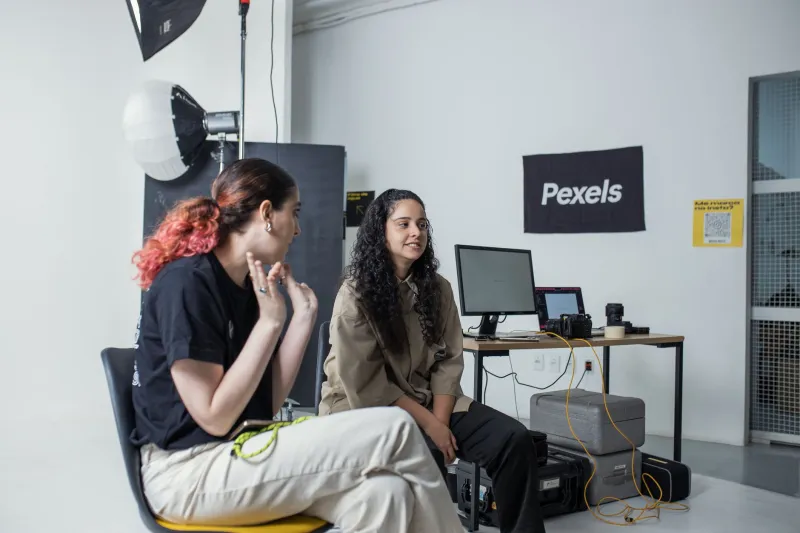
Photo by Photo by Joseph Morris on Unsplash on Unsplash
At some point, almost every working designer or artist gets the same piece of advice: make your portfolio approachable. Lead with the commercial work. Bury the personal projects. Keep the experimental stuff for the back pages, if you include it at all. Show range. Don't make anyone uncomfortable before they've had a chance to like you.
It's practical advice. It's well-intentioned. And it has ruined a lot of careers by filling them with the wrong clients.
Here's the uncomfortable truth most portfolio consultants won't say directly: a portfolio that appeals to everyone attracts the clients who chose you because nothing about you scared them off. And those clients — the ones who needed something safe, something familiar, something that wouldn't require them to defend a choice to their boss — are almost never the ones who push your work somewhere interesting.
The Filter Is the Feature
Think about the last piece of work you made that you were genuinely proud of. The thing that felt like you — not a compromise, not a translation of someone else's vision, but something that came from a real place. Now ask yourself: how prominently does that live in your portfolio?
If the answer is "buried on page three" or "in a separate section labeled 'personal work' that most clients never click," you're already losing the game before it starts.
Strong, specific, uncompromising work at the front of your portfolio does something that accessible work can't: it self-selects. The client who sees it and immediately thinks this is not for me is right. They were never going to be a good fit. The friction you've just created isn't a failure of marketing — it's the system working correctly.
Japanese artisans have understood this for generations. A swordsmith who has spent decades perfecting a single style of blade doesn't display a range of decorative objects to seem more approachable. The depth of commitment to one thing is the pitch. It says: I have gone further in this direction than most people are willing to go, and if that's what you need, I'm the only one.
Specificity is a form of confidence. And confidence, in creative work, is magnetic to exactly the people who can handle it.
What Boldness Actually Looks Like in the US Market
Here's where it gets culturally specific, because the American market has a complicated relationship with creative confidence. There's a fine line between a strong point of view and what reads as arrogance — and navigating that line matters if you want the strategy to work.
The difference, mostly, is generosity. Work that says here is what I believe and here is how it serves the problem lands differently than work that says here is what I made and you should appreciate it. The first invites the right client in. The second just postures.
When you frame bold work in terms of what it does — the problem it solves, the audience it moves, the behavior it changes — you give a potential client something to stand behind. You're not asking them to trust your taste blindly. You're showing them that your taste is purposeful, that the choices that look unusual from the outside are load-bearing, not decorative.
That framing is the difference between a portfolio that scares off everyone and one that scares off the wrong people while drawing the right ones in close.
The Practical Architecture of a Bold Portfolio
So what does this actually look like in practice?
Lead with your most specific work, not your most versatile. If there's a project that perfectly represents how you think — one that shows your instincts, your references, your problem-solving approach in the clearest possible way — that's your opener. Not your broadest client or your biggest brand name.
Write case studies that argue a position. Most portfolio case studies read like project summaries: here's the brief, here's what we made, here are the metrics. The stronger version makes a creative argument: here's what we believed about the problem, here's the logic behind the choices, here's what we were willing to risk and why. That kind of writing self-selects for clients who want a collaborator, not an executor.
Don't apologize for the experimental work. The instinct to contextualize personal or experimental projects — to front-load disclaimers about how they were made without a brief, or how they're "more conceptual" — signals insecurity. Let the work stand. If it needs a defensive introduction, either the work isn't ready or your confidence in it isn't.
Make the aesthetic of the portfolio itself a statement. The design of the container is part of the pitch. A portfolio that looks like everyone else's tells a prospective client that you'll design like everyone else. The designers and artists who attract genuinely interesting work tend to have portfolios that are unmistakably theirs — sometimes odd, sometimes spare, sometimes dense, but always specific.
The Clients You'll Lose and the Ones You'll Find
Let's be honest about what this approach costs. You will lose clients who wanted something safe and chose you because you seemed like a low-risk option. You will lose RFP responses where the committee needed to justify the choice and couldn't find safe language for what you do. You will occasionally make someone uncomfortable in a first meeting.
This is fine. These are not your people.
What you gain is harder to quantify but much more durable: clients who found you because something in your work felt like the only possible answer to their problem. Clients who give you more latitude because they hired you for your judgment, not just your execution. Projects that push you forward rather than keeping you in place.
There's a concept in Japanese aesthetics — kodawari — that roughly translates to an obsessive, uncompromising commitment to a personal standard. It's the quality that makes a ramen chef spend thirty years perfecting a single broth. It's not stubbornness. It's the kind of depth that makes people travel across the country for a bowl of noodles.
Your portfolio can have that quality. It requires trusting that the people who get it are worth more than the people who don't.
Put the weird work first. Let it do its job.