Cracks, Rust, and Premium Price Tags: Is American Luxury Ready for Wabi-Sabi, or Just Pretending?
The Cracked Bowl That Costs More Than Your Rent
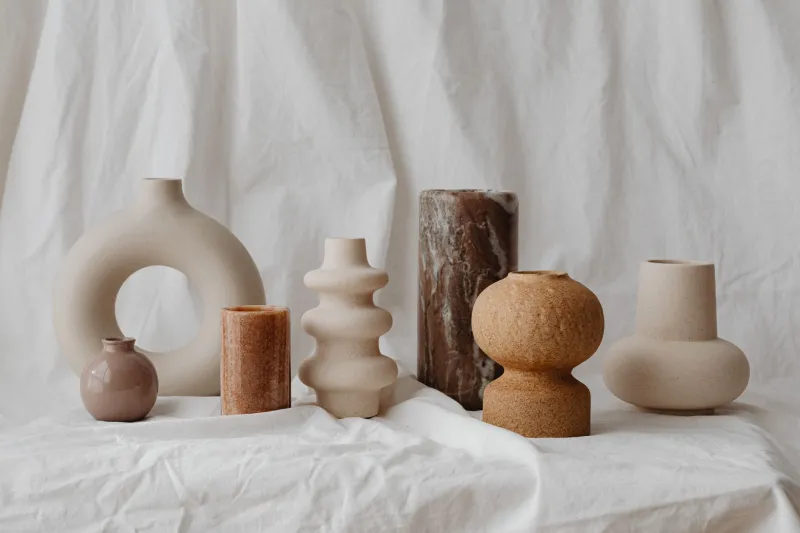
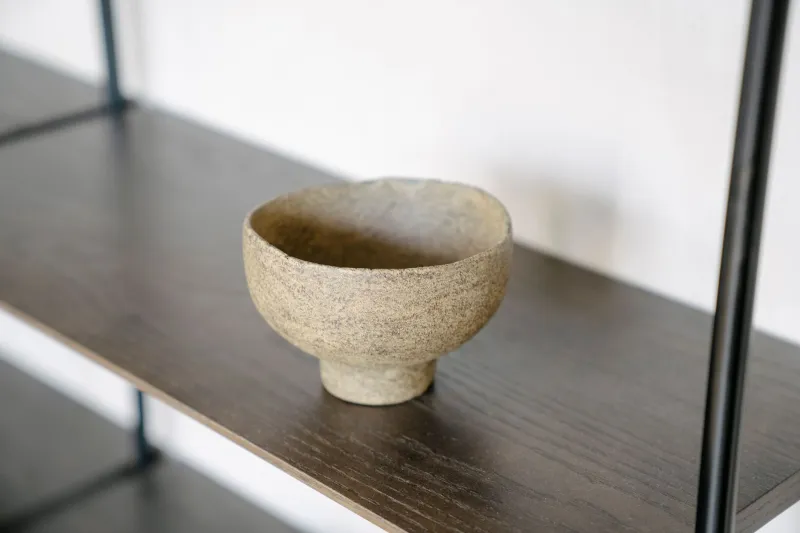
Somewhere in a Soho boutique, there's a ceramic mug with a deliberately uneven rim selling for $140. The glaze drips asymmetrically. The handle is slightly off-center. The brand's Instagram caption mentions "embracing imperfection" and the Japanese concept of wabi-sabi. It has 4,200 likes.
This is either the most honest thing happening in luxury marketing right now — or the most cynical. Possibly both.
Wabi-sabi, for those who haven't encountered the term before, is a Japanese aesthetic and philosophical framework centered on the beauty of impermanence, incompleteness, and imperfection. It finds the sublime in the weathered, the cracked, the asymmetrical. A tea bowl repaired with gold lacquer. A mossy stone path worn smooth by decades of footsteps. A linen cloth that's been washed so many times it's gone soft and slightly shapeless.
It is not, traditionally, a marketing strategy.
And yet here we are.
Why Now?
The timing makes a certain kind of sense. American consumers — particularly affluent millennials and Gen Z buyers — are exhausted by the visual language of traditional luxury. The high-gloss perfection, the symmetrical logo placement, the hermetically sealed retail environments. It all feels increasingly hollow, a kind of performance of value rather than the thing itself.
At the same time, there's a widespread cultural burnout around optimization culture — the idea that everything, including the self, should be constantly refined toward some ideal state. Wabi-sabi offers a philosophical off-ramp from that. It says: the crack is not a flaw. The crack is where the story lives.
For brands looking to differentiate in an oversaturated market, that's a compelling narrative. And for consumers looking for permission to stop performing perfection, it's genuinely resonant.
So the commercial appeal isn't hard to understand. What's harder is figuring out who's doing it with integrity and who's just draping a philosophy over a price tag.
The Case for Authentic Adoption
Let's be fair: some of what's happening here is genuinely interesting.
Certain ceramics studios, small-batch textile makers, and independent furniture designers in the US have been working within wabi-sabi-adjacent aesthetics for years — not as a trend move, but as a genuine design conviction. Their work tends to be slow, labor-intensive, and rooted in an actual understanding of the philosophy. The imperfection in their pieces isn't manufactured. It's the natural result of handwork, natural materials, and time.
When a brand like this talks about wabi-sabi, they've usually earned it. The philosophy is embedded in how they make things, not just how they describe them.
There are also cases where larger brands have engaged with the concept in ways that feel considered. Some American ceramics lines have partnered with Japanese artists to develop glazing techniques that carry real craft lineage. Some interior design brands have moved toward natural material palettes and irregular forms that reflect a genuine rethinking of what "luxury" means — less about perfection and more about presence.
These examples exist. They're worth acknowledging.
The Case for Skepticism
But then there's the other stuff.
The mass-produced "artisanal" candle with a slightly off-center label, described in marketing copy as "honoring the beauty of the handmade." The fast-fashion brand releasing a "wabi-sabi collection" of intentionally distressed clothing. The tech startup using the term in its brand guidelines to justify a lazy design system.
This is aesthetic extraction without philosophical grounding. And it matters — not just as a cultural appropriation concern, though that's real — but because it actively hollows out the concept it claims to embrace.
Wabi-sabi is not a visual style. You cannot achieve it by making things look rough. The philosophy is about a relationship with impermanence — an acceptance of the fact that things change, age, break, and that this process is not tragic but beautiful. That's a worldview. It takes time to internalize. It cannot be applied like a filter.
When brands use the language of wabi-sabi to sell products that are still manufactured for obsolescence, still designed to be replaced next season, still fundamentally oriented around consumption and newness — the contradiction is almost comedic. A philosophy of impermanence being used to sell you something new.
What Gets Lost in Translation
There's a deeper issue here that I keep coming back to. Wabi-sabi, like many Japanese aesthetic concepts, is inseparable from a specific cultural and spiritual context — one rooted in Zen Buddhism, in a particular relationship with nature and time, in ways of living that don't map cleanly onto American consumer culture.
This doesn't mean Western creatives can't engage with it meaningfully. Cultural exchange is real and valuable. But engagement is different from extraction. Engagement involves sitting with the discomfort of not fully understanding something, learning slowly, letting it change how you work rather than just how you describe your work.
Most luxury marketing doesn't have time for that. The trend cycle moves fast. The concept gets flattened, aestheticized, stripped of context, and sold back at a premium.
What's left isn't wabi-sabi. It's the idea of wabi-sabi. Which is, ironically, about as far from the original philosophy as you can get.
So Where Does That Leave Us?
I don't think the answer is to declare the whole trend off-limits. That's not how culture works, and it's not how design works either. Influence, borrowing, and reinterpretation are part of the creative process. The question is whether it's done with awareness.
The brands and designers that will actually do something interesting with wabi-sabi are the ones willing to let it be uncomfortable. To let it slow them down. To let it change not just their visual language but their relationship to production, to materials, to time.
The cracked bowl that costs $140 might be worth it — if the crack was made by human hands, if the person who made it understood why imperfection is beautiful, and if the brand selling it has thought seriously about whether their entire business model contradicts the philosophy they're invoking.
If not, it's just a cracked bowl. And you can find those for free.