You Can't Buy Ma: What Luxury Brands Keep Getting Wrong About Japanese Minimalism
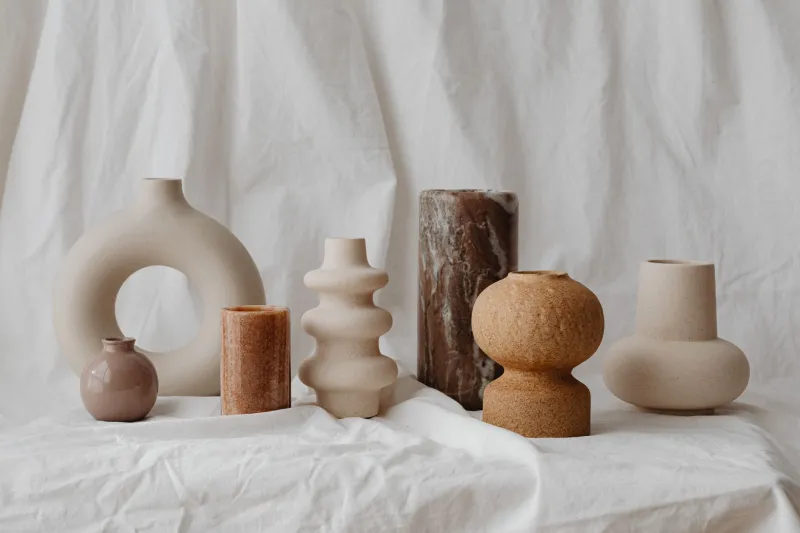
Open any luxury lifestyle catalog from the last five years and you'll find it: the single ceramic object on an empty shelf. The linen in shades of fog and stone. The product shot where most of the frame is just... nothing. The copy that gestures toward "intentionality" and "quiet luxury" and, if the brand is feeling particularly ambitious, something called wabi-sabi.
It looks beautiful. It also tends to be completely hollow.
Western luxury brands have gotten very good at the visual grammar of Japanese minimalism. What they haven't figured out — and what most of them aren't even trying to figure out — is the philosophy underneath it. And that gap matters, both aesthetically and ethically.
What Ma Actually Is (And Isn't)
Let's start with ma, since it's the concept that gets borrowed most carelessly. In Japanese, ma (間) refers to negative space — but not in the design-school sense of "the space around an object." It's more like the space that gives meaning to what surrounds it. The pause between notes that makes music rather than noise. The threshold between rooms that isn't quite inside or outside. The moment of silence in a conversation that says more than words would.
Ma is not decoration. It's not the absence of clutter. It's a dynamic, living quality — something that exists in relationship, not in isolation. You can't manufacture it by removing furniture from a room and photographing the result at golden hour.
And yet that's essentially what a lot of premium brands are doing. They're selling emptiness as a product. Which is, if you think about it, the exact opposite of what ma means. Ma is meaningful because of what it's in relation to. An empty hotel room with a $900-a-night price tag isn't practicing restraint — it's just charging more for less and calling it philosophy.
Wabi-Sabi Is Not an Aesthetic Filter
Wabi-sabi has had an even rougher ride in the West. The concept — which finds beauty in impermanence, imperfection, and incompleteness — has been reduced to a visual style: rough textures, asymmetrical ceramics, things that look deliberately unfinished. Brands slap it onto everything from skincare packaging to apartment furniture.
But wabi-sabi isn't a look. It's a relationship with time and transience. A tea bowl valued in the wabi-sabi tradition has been used, repaired, aged. It carries a history. The cracks are real. The asymmetry wasn't art-directed.
When a brand mass-produces a "wabi-sabi inspired" mug with machine-made irregularities and sells it for $85, they're not honoring the concept — they're inverting it. They've taken a philosophy rooted in acceptance of the impermanent and turned it into a permanent, purchasable aesthetic object. The imperfection is fake. The transience is gone. What's left is just vibes.
Where Some Brands Actually Get It Right
This isn't a blanket condemnation. A few Western brands have engaged with Japanese design philosophy in ways that go deeper than surface texture.
Apple — and specifically the influence of Jony Ive, who was open about his debt to Dieter Rams and, through Rams, to Japanese design thinking — understood that restraint in design is a discipline, not a style choice. The decision to remove something from a product is harder than adding it. It requires knowing exactly what the thing is for and ruthlessly eliminating everything that doesn't serve that purpose. That's a practice. It takes time and institutional commitment.
The Japanese brand MUJI — now widely available in the US — is perhaps the most coherent example of ma applied commercially. The brand's entire identity is built around the idea of "no brand quality goods": products stripped of unnecessary branding, excess feature sets, and decorative noise. What's left is function and proportion. It's not glamorous minimalism. It's disciplined humility. Crucially, MUJI's prices reflect that humility too — the philosophy isn't being used to justify a markup.
The Ethics of the Aesthetic
There's a harder conversation embedded in all of this, and it's worth having directly: when a predominantly white, Western luxury brand lifts aesthetic concepts from Japanese culture — concepts with deep philosophical and spiritual roots — and uses them to sell $400 candles to wealthy Americans, something uncomfortable is happening.
It's not necessarily malicious. But it is a kind of extraction. The brand gets the cachet of depth and intentionality without doing the work of actually understanding what it's borrowing. And the cultural tradition being borrowed from gets flattened into a mood, a filter, a selling point.
Authentic engagement with another culture's design philosophy requires more than research and a good art director. It requires humility — the acknowledgment that you might not fully understand what you're working with, and that the appropriate response to that is to go slower, ask more questions, and maybe hold back.
Which is, when you think about it, exactly what ma is asking you to do.
What Real Restraint Requires
Here's the thing about genuine minimalism, Japanese or otherwise: it's not a starting point. It's an endpoint. You arrive at it after a long process of understanding what something needs to be, removing everything that isn't that, and then sitting with the discomfort of the absence until you're sure you haven't taken too much.
That process is slow. It's uncertain. It doesn't photograph well in progress. It can't be trend-cycled.
For brands genuinely interested in engaging with these ideas rather than just borrowing their look, the starting point isn't a new campaign direction. It's a question: what is this product or experience actually for? And what can we remove without losing that?
If the answer to that question leads somewhere quiet and undecorated and genuinely useful, you might be getting somewhere. If it leads to a beautifully shot empty room with a price tag attached, you're probably just selling the idea of restraint to people who can afford not to practice it.
That's not ma. That's marketing. And there's a difference — even if it's getting harder to see.