Why American Storytellers Are Finally Letting Things Fall Apart Without Fixing Them
Something Feels Different About the Stories We're Telling Now
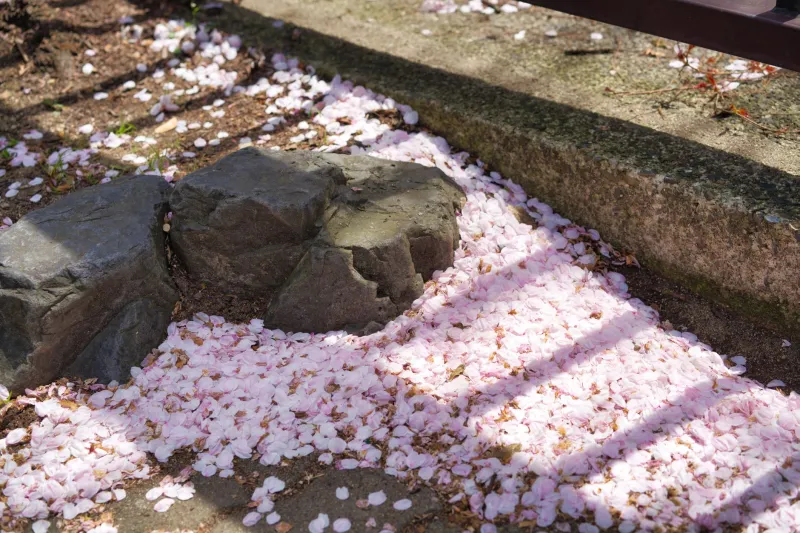
There's a specific kind of sadness that hits when cherry blossoms start falling. Not grief, exactly. Not loss in the traditional sense. It's more like — you knew this was coming, you watched it happen, and somehow that made it more beautiful, not less. The Japanese have a phrase for this: mono no aware. Loosely translated, it means "the pathos of things," a gentle, almost grateful melancholy at the transience of everything.
For a long time, Western storytelling didn't really have room for that feeling. Stories were supposed to arc. Problems were supposed to resolve. Heroes were supposed to win, or at least learn something concrete. Happy ending, tragic ending — either way, a conclusion. A door closing.
But something has been shifting. Quietly, almost sneakily, a different emotional register has been creeping into American films, indie games, prestige TV, and literary fiction. Stories that end without resolving. Characters who change without triumphing. Moments that land hardest precisely because they don't last. And a growing number of creators working in the US are tracing that shift directly back to mono no aware.
The Concept, Without the Jargon
Before getting into how it's showing up in American culture, it helps to understand what mono no aware actually is — and what it isn't.
It isn't depression. It isn't nihilism. It isn't the Western idea of tragic beauty, which usually involves something or someone being destroyed in a grand, operatic way. Mono no aware is quieter than that. It's the feeling you get watching summer end. It's the specific weight of a childhood home that's been sold. It's finishing a really good book and sitting with it for a minute before you can move on.
The concept has roots in Heian-period Japanese literature — most famously in The Tale of Genji — and it's been central to Japanese aesthetics ever since. It's why Japanese poetry so often circles around seasons, why so many anime storylines feel emotionally complete without being emotionally tidy, why a film like Spirited Away can leave you feeling full and a little hollow at the same time.
What makes mono no aware distinct is that the transience is the point. The thing passing is beautiful because it passes.
Where It's Showing Up in American Work
Look at the indie game scene over the last several years and you'll start to see it everywhere. Games like Gris, Journey, and What Remains of Edith Finch aren't structured around overcoming obstacles — they're structured around moving through feeling. There's no final boss standing between you and emotional resolution. The journey itself is the resolution.
Designers working in this space talk openly about the influence. One narrative designer who works primarily on experimental games described her process this way: she starts by asking not "what does the player need to solve?" but "what does the player need to feel, and then let go of?" That reframing — from problem to passage — is essentially mono no aware in design terms.
On the TV side, shows like The Bear, Fleabag, and Beef have been celebrated partly because they resist the tidy emotional payoff. Characters make breakthroughs and then backslide. Relationships almost work. Moments of grace appear and disappear before anyone can hold onto them. Critics keep reaching for words like "raw" and "honest" to describe what makes these shows feel different, but mono no aware might be the more precise term.
Even in mainstream film, something has changed. The endings of recent prestige pictures increasingly favor ambiguity — not the frustrating kind that feels like the filmmakers didn't know how to finish, but the kind that trusts the audience to sit with something unresolved.
Why Now? Why Here?
It's worth asking why American audiences seem more receptive to this emotional mode than they were, say, twenty years ago.
Part of it is probably cultural fatigue. The traditional hero's journey — struggle, transformation, triumph — has been so thoroughly strip-mined by franchise entertainment that audiences are hungry for something that doesn't follow the formula. When every story promises a satisfying conclusion, the absence of that promise starts to feel refreshing.
Part of it is also, honestly, lived experience. The last several years have handed Americans a lot of situations that didn't resolve cleanly. Losses that didn't come with lessons. Changes that didn't lead anywhere you could call progress. For a lot of people, stories that acknowledge impermanence without trying to fix it feel more true than stories that insist on meaning-making.
And part of it is the slow, steady influence of Japanese culture on American creative consciousness — not as trend or appropriation, but as genuine cross-pollination. A generation of American creators grew up watching Studio Ghibli, reading manga, playing JRPGs. Those aesthetic sensibilities didn't stay quarantined in a "Japanese media" box. They seeped in.
The Design Challenge of Impermanence
For creators who want to work in this emotional register, there are real craft challenges involved. Mono no aware is easy to describe and genuinely hard to execute — especially in American commercial contexts where notes from producers or publishers often push toward clarity and resolution.
One screenwriter described the constant negotiation of trying to hold onto ambiguity: "Every draft, someone wants the character to have a bigger realization. A speech. Something that tells the audience how to feel about what just happened. And I keep trying to explain that the whole point is that we don't tell them. The feeling lives in the space we leave open."
That tension — between the American storytelling instinct to explain and the mono no aware instinct to simply witness — is where a lot of interesting creative work is happening right now.
The visual design side has its own version of this challenge. How do you build a UI, a color palette, a sound design that carries a sense of impermanence without tipping into sadness? The answer, for a lot of designers, is restraint. Space. Letting something be almost-enough without pushing it to completion.
The Feeling That Doesn't Need a Fix
There's something almost countercultural about mono no aware in the American context. We're a culture that is deeply, structurally committed to the idea that things can be improved — that the right effort, the right attitude, the right ending will make the hard thing worth it. Mono no aware doesn't argue with that, exactly. It just quietly suggests that some things are worth it as they are, including the passing.
The stories that carry this feeling don't ask you to do anything with your sadness. They don't promise that the grief will become wisdom or the loss will become strength. They just sit with you for a while, and then they end, and you carry something forward that doesn't have a name.
Maybe that's why it translates so well, even without translating. You don't need to know the phrase to recognize the feeling. You've felt it. Most people have. It just took a different storytelling tradition to finally give it a shape.