Feelings We Never Had a Name For (Until Now)

Photo by Photo by Lucas Calloch on Unsplash on Unsplash
Something funny happens when you hand someone a word they didn't know they needed. Their eyes go a little wide. They say something like, oh — that's a thing? And then they say it again, quieter, like they're trying it on.
That's been happening a lot lately in American psychology circles, in wellness apps, in design studios, and in the comment sections of Reddit threads that somehow get surprisingly philosophical at two in the morning. The words doing all this work aren't English. They're Japanese. And the feelings they describe? Turns out we've been having them all along — we just didn't have anywhere to put them.
The Emotional Vocabulary We Didn't Know We Were Missing
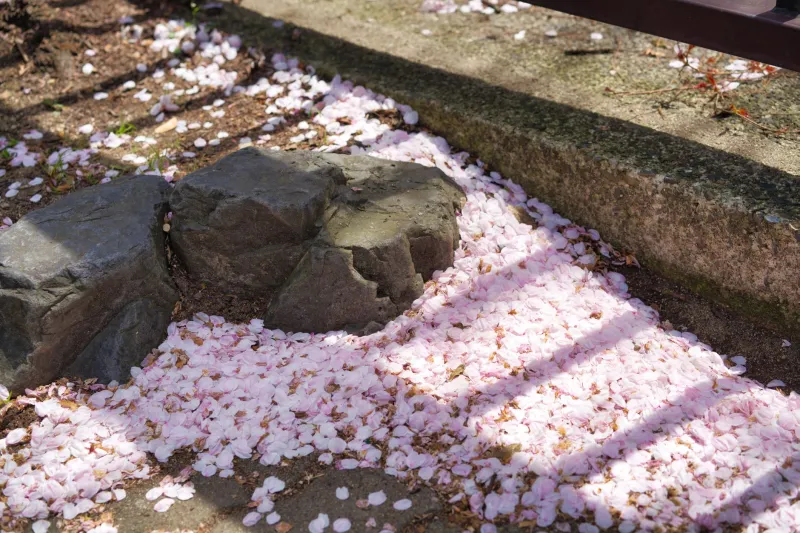
Let's start with mono no aware. Loosely translated, it means something like "the pathos of things" — that bittersweet ache you feel watching cherry blossoms fall, or the last hour of a really good vacation, or your kid's outgrown shoes sitting by the door. It's not sadness, exactly. It's more like tenderness toward the fact that beautiful things don't last. American English gestures at this with words like "bittersweet" or "nostalgia," but neither quite lands the same way. Nostalgia points backward. Mono no aware lives entirely in the present tense, aware that the present is already leaving.
Then there's yūgen — a word that doesn't really translate so much as it gestures. It describes a kind of profound, mysterious grace: the feeling of watching fog settle over a mountain, or the specific silence after a piece of music ends, or the way certain architectural spaces make you feel small in a way that's somehow comforting rather than diminishing. It's aesthetic and emotional at the same time. It asks you to hold both the beauty and the unknowability of something without resolving the tension.
And komorebi — maybe the most immediately lovable of the bunch — is that particular quality of sunlight filtering through leaves. The word captures both the visual phenomenon and the feeling it produces. It's a named experience of something most of us have noticed a hundred times without ever thinking it deserved a name.
Why American Audiences Are So Ready for This
There's a real question worth sitting with here: why now? Japanese culture has been part of the American cultural conversation for decades. So why are these specific emotional concepts landing so hard at this particular moment?
Part of the answer is probably exhaustion. American emotional culture has, for a long time, leaned heavily toward resolution. Feel bad? Fix it. Sad? Work through it. The entire architecture of mainstream self-help — and a lot of cognitive behavioral therapy, for that matter — is oriented around moving through negative emotional states toward something more functional. Which is useful! But it also quietly implies that the in-between feelings, the ones that don't resolve, are problems to be solved rather than experiences to be had.
Japanese emotional vocabulary doesn't operate that way. Mono no aware isn't something you overcome. Yūgen isn't a problem. These concepts give language to states that are complete in themselves — not waypoints on the way to feeling better, but legitimate emotional destinations. For a culture that's increasingly burned out on the relentless pursuit of optimization, that's genuinely radical.
Therapists have started noticing. A growing number of practitioners are incorporating non-English emotional vocabulary into their work — not as exotic decoration, but as actual clinical tools. When a client can't articulate what they're feeling in English, sometimes a Japanese or Portuguese or Danish word opens a door that was stuck. The concept of saudade, the Portuguese ache for something absent, has been doing similar work. The Japanese concepts are arriving into that same conversation.
How It's Showing Up in Design
Designers are paying attention too, and not just in the vague "we're inspired by Japanese aesthetics" way that's been floating around creative studios for years. The influence is getting more specific, more intentional, and more emotionally sophisticated.
Wellness apps are a useful place to watch this play out. Several newer entrants in the meditation and mental health space have started building their emotional check-in features around expanded vocabulary — explicitly introducing users to concepts like mono no aware or wabi (the beauty of imperfection) as part of the experience. The bet is that naming an emotion more precisely helps people relate to it differently. Early user research seems to support this: people report feeling more validated and less pathologized when an app acknowledges that some feelings are just feelings, not symptoms.
In physical design and architecture, the influence shows up in how spaces are being conceived. There's growing interest in designing for ma — the Japanese concept of negative space and meaningful pause — in everything from office layouts to retail environments. But increasingly, that's being paired with a more explicit emotional intention: not just "leave empty space" but "design for the feeling of yūgen, for spaces that hold mystery rather than resolve it."
Even product design is catching up. There's a quiet but noticeable shift happening in how some American designers talk about the emotional texture of objects — the way a well-worn tool feels different from a new one, the specific satisfaction of something that shows its age honestly. That's wabi-sabi territory, but it's also adjacent to mono no aware: the acknowledgment that time passing through an object is part of what makes it worth having.
What This Reveals About English
Here's the uncomfortable part of this conversation: the reason these Japanese concepts feel revelatory to American audiences is partly because English has some genuine emotional blind spots. It's a language built, in many ways, around action, resolution, and clear categorization. Feelings that are ambiguous, or that don't point toward a next step, often get flattened into the nearest available approximation.
That's not a flaw so much as a reflection of the culture that shaped the language. But it does mean that whole categories of human experience have been living in a kind of linguistic shadow — felt but unnamed, valid but unverified.
Borrowing words from other languages isn't appropriation. It's how languages have always grown. English has been doing it for centuries, absorbing terms from French, German, Latin, and dozens of other languages when its existing vocabulary came up short. The current wave of Japanese emotional concepts entering American psychological and design discourse feels like a natural continuation of that process — the language catching up to the full range of what people actually experience.
The Feeling Itself Is the Point
There's something almost poetically appropriate about the fact that these particular Japanese concepts are spreading the way they are — not through academic papers or formal cultural exchange, but through Instagram captions and therapy sessions and app onboarding flows and late-night internet rabbit holes. They're moving the way feelings move: person to person, quietly, because someone needed a word and found one.
If you've ever stood in a forest and watched light break through the canopy and felt something you couldn't quite name — well. Now you have a name for it. And somehow, having the name doesn't diminish the feeling. It just makes it more yours.
That's komorebi. And apparently, we've all been feeling it for years.