Getting Rejected Is Part of the Job — Japanese Artists Have Always Known This

Here's a scenario that probably sounds familiar: you spend three weeks on a concept. You believe in it. You send it over. The client comes back with a list of changes that essentially dismantles the whole thing. And suddenly you're not just revising a design — you're questioning whether you should be doing this at all.
That spiral is real, and it's exhausting. But it's also, at least in part, a cultural inheritance. The way Americans are taught to relate to creative work — as an extension of the self, a declaration of identity — makes rejection feel like a verdict on who you are, not just what you made.
Japanese creative tradition tends to see it differently. And if you're willing to sit with that discomfort for a minute, there's something genuinely useful on the other side.
Discomfort as a Design Tool
There's a concept in Japanese thought — loosely tied to the word mononoke in its broader cultural usage — that describes the unsettled, sometimes uneasy quality of living things. The idea that discomfort isn't a malfunction but a signal. Something alive and worth paying attention to.
In creative terms, that translates into something pretty radical: the friction you feel when your work gets pushed back isn't a problem to eliminate. It's information. It's the work telling you something.
Japanese artists and craftspeople have long operated within systems of critique that are structured, iterative, and frankly relentless. Apprentices in traditional crafts spend years having their work examined and corrected before they're trusted to work independently. The feedback isn't softened. But it's also not personal — it's directional. The assumption built into the whole system is that the work is always in progress, and the person making it is always learning.
That's a fundamentally different starting point than the American model, which tends to treat the completed portfolio piece as a finished argument about your worth as a creative.
Why American Creatives Take It So Hard
This isn't a knock on American designers or artists. The cultural context matters. In the US, creative work is often framed as self-expression first — your voice, your vision, your brand. That framing has real value. It produces bold, original work. It encourages people to take risks.
But it also sets up a painful equation: if the work is you, then criticism of the work is criticism of you. Client revisions become personal slights. Rejection letters feel like character assessments. The design industry is full of talented people quietly burning out not because the work is too hard, but because every piece of feedback lands like a small identity crisis.
The bicultural creatives who seem to navigate this most gracefully are often the ones who've been exposed to both frameworks — who grew up with the American emphasis on individual voice but also absorbed some version of the Japanese understanding that critique is collaborative, not combative.
Separating the Maker from the Made
One of the more practical shifts you can make — and this is something you can actually try, not just a philosophical aspiration — is to get deliberate about the language you use when talking about your own work.
Notice how often you say "my design" versus "this design." Notice when you say "they rejected me" instead of "they passed on the concept." The language isn't just semantic. It shapes how you process the experience.
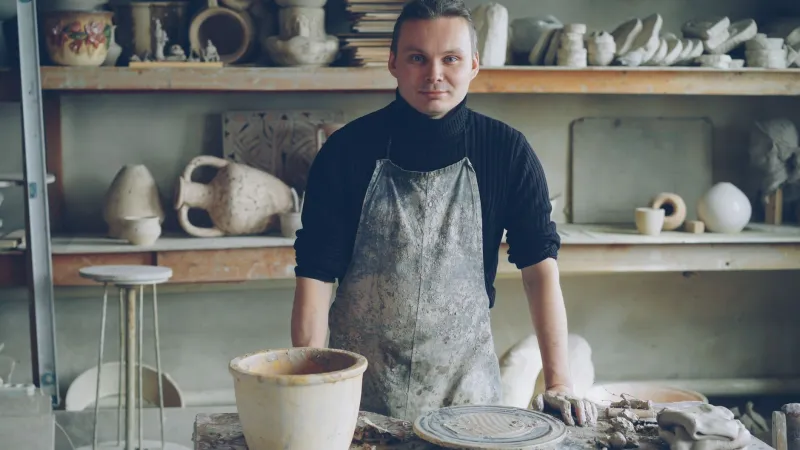
In Japanese craft traditions, the maker and the made are understood as distinct, even when the relationship is intimate. A ceramicist doesn't take it personally when a pot cracks in the kiln. They study the crack. They adjust the clay, the temperature, the technique. The failure belongs to the process, not the person.
Applying that to client work doesn't mean becoming detached or indifferent. You can care deeply about what you're making while also holding it a little loosely — staying curious about why something isn't landing instead of immediately defending it or collapsing under the weight of the feedback.
Critique as Collaboration, Not Combat
Another thing Japanese creative culture tends to do well: it frames revision as a shared project. When a client pushes back, that's not the end of the conversation — it's the conversation actually starting. The first round of work is an opening move, not a final statement.
This reframe is genuinely useful in client relationships. Instead of presenting work as a finished proposal waiting to be approved or rejected, try presenting it as a starting point designed to generate a real dialogue. "Here's where I began, and here's what I want to understand from you" lands very differently than "here's my design, what do you think?"
It shifts the dynamic from evaluation to collaboration. And it makes the inevitable back-and-forth feel less like failure and more like the actual work of designing.
Building the Muscle
Resilience around rejection isn't something you either have or don't. It's a capacity that gets built over time, and it gets built by doing the thing that feels uncomfortable — submitting the work, getting the feedback, sitting with the discomfort instead of running from it.
What Japanese creative tradition offers isn't a shortcut around that process. It's a framework that makes the process feel less like punishment. If discomfort is information rather than indictment, you can stay in the room with it longer. You can get curious instead of defensive. You can revise without feeling like you're admitting defeat.
That's the uncomfortable gift at the center of this whole thing. The rejection, the critique, the client who wants it completely different — all of it is the work. Not a detour around the work. Not an obstacle between you and the good stuff. The actual, necessary, unglamorous process of making something worth making.
American creative culture is slowly starting to catch on to this. The language of "iteration" and "feedback loops" has made its way into design studios and creative agencies across the country. But iteration as a buzzword and iteration as a genuine philosophy are different things. One is a process step. The other is a way of understanding what you're even doing when you sit down to make something.
The Japanese creative tradition has been living in that second place for a long time. It's worth borrowing more than the aesthetic.